
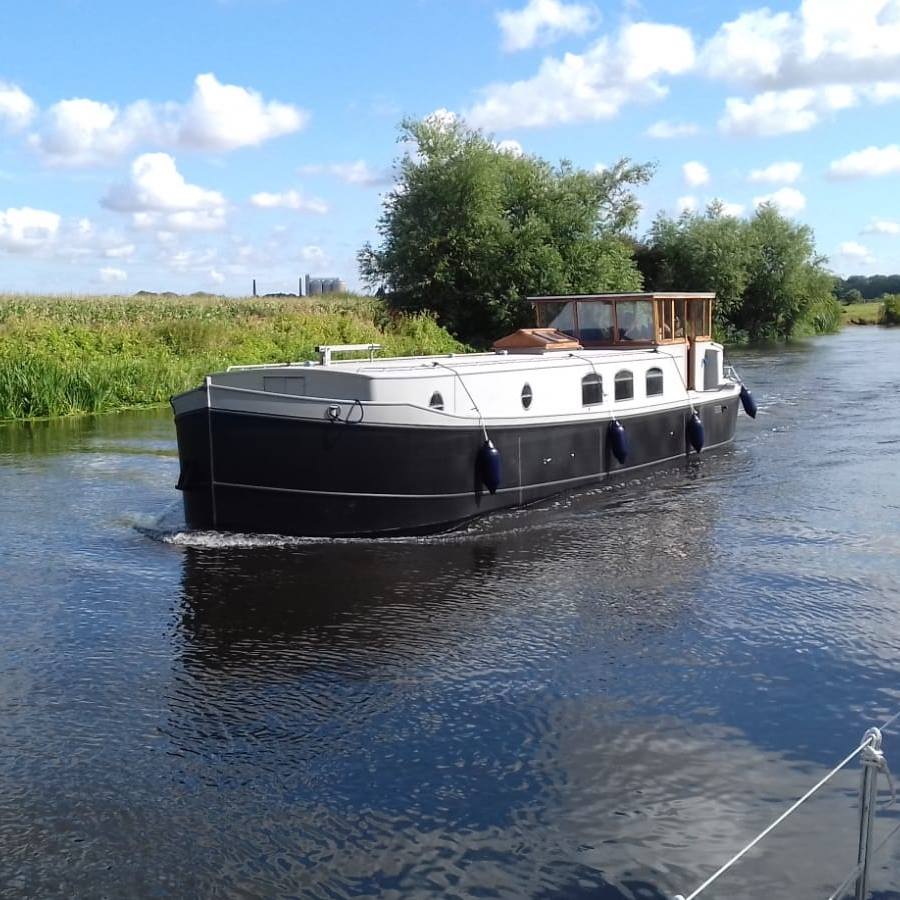
When you turn to White Rose Boats for narrowboat and widebeam repairs, you gain a trusted, full-service marine team dedicated to keeping your vessel safe, dry, and fully operational on the UK waterways.
From essential hull blacking, anode replacement, and precision steel over-plating to complex engine overhauls, stern gland repacking, and electrical diagnostics, our experienced engineers manage every issue with technical expertise and marine-grade materials.
We understand the unique challenges of canal boat systems—whether rectifying Boat Safety Scheme (BSS) failures, repairing solid-fuel stoves, or resolving intricate 12V and off-grid power faults.
By choosing White Rose Boats, you receive prompt diagnosis, transparent pricing, and robust craftmanship that restores your boat’s performance and protects your investment for the long haul.
Maintaining a narrowboat or widebeam involves managing two distinct systems: the marine/hull hardware in contact with the water and engine bay, and the domestic/living systems inside the boat.
Here is a breakdown of the most common average repairs boaters encounter, categorized by area:
1. Hull & Exterior Maintenance
- Hull Blacking & Anode Replacement (Every 2–3 Years):The steel underwater hull must be periodically blacked (coated in bitumen or epoxy) to prevent rusting. At the same time, sacrificial magnesium anodes wear away and must be replaced to prevent galvanic corrosion of the hull and propeller.
- Steel Work & Pitting Repairs (Over-plating):Over time, steel below the waterline thinned by rust or galvanic action requires spot-welding patches or fitting complete new steel plates (over-plating) to restore structural integrity and pass ultrasonic hull surveys.
- Gunwale & Deck Rust Treatment:Scrapes from lock walls and towpaths damage topcoats, requiring regular spot sanding, priming, and painting to stop rust from creeping under cabin side panels.
- Window & Hatch Resealing:Vibrations and seasonal weather cause window frame seals, deck fittings, and mushroom vents to leak, requiring old sealant to be scraped away and replaced with marine-grade polyurethane sealants.
2. Engine & Drivetrain Servicing
- Stern Gland Packing & Adjustment:The stern gland seals the shaft where the propeller exits the hull. Over time, the internal greased rope packing wears down, causing excessive bilge water ingress. Re-packing or adjusting the gland nut is a frequent maintenance task.
- Propeller De-fouling & Damage Repair:Canal debris (ropes, plastic bags, logs) often fouls or bends propeller blades, leading to severe vibration. Repairs range from clearing the weed hatch to straightening or replacing damaged blades.
- Standard Engine Servicing:Changing oil filters, fuel filters, drive belts, and raw-water impeller blades (if applicable) every 100–250 engine hours to prevent engine overheating or breakdowns.
- Gearbox & Drive Coupling Alignment:Engine engine mounts settle over time, causing misalignment between the engine output shaft and prop shaft, which leads to vibration and premature wear on couplings and bearings.
3. Heating, Plumbing & Gas Systems
- Solid Fuel / Wood-Burning Stove Maintenance:Stoves require frequent maintenance: replacing worn door rope seals, cracked glass panels, burnt-out firebricks, and sweeping/replacing rusted flue pipes.
- Diesel Heating Unit Overhauls:Boilers (e.g., Webasto, Eberspächer, Alde) frequently coke up with carbon deposits due to low-run cycles or poor-quality fuel, requiring burner glow plugs and mesh screens to be cleaned or replaced annually.
- Water Pump & Accumulator Repairs:12V fresh water pressure pumps suffer diaphragm wear or pressure switch failure, while accumulator tanks lose air pressure, leading to water pulsation or pump cycling.
- Gas System Leak Fixes:LPG regulators, high-pressure hoses (pigtails), and copper gas lines fail 4-year Boat Safety Scheme (BSS) pressure drop tests and must be renewed.
4. Electrical & Battery Systems
- 12V Leisure Battery Replacement:Deep-cycle lead-acid or AGM battery banks degrade rapidly if left in a partially discharged state (common during winter continuous cruising). Replacing leisure battery banks every 3 to 5 years is common unless upgraded to lithium (LiFePO4).
- Alternator & Belt Repairs:High-output domestic alternators work hard to charge leisure banks; worn belts, failing voltage regulators, and blown diodes are common mechanical repairs.
- Inverter / Charger Troubleshooting:Heavy electrical loads can trip or damage combined inverter-chargers, requiring fuse replacements or unit servicing.